위키트리
먹는 자외선 차단제가 있다?…'이것'만 해도 콜라겐이 살아납니다
풋볼리스트
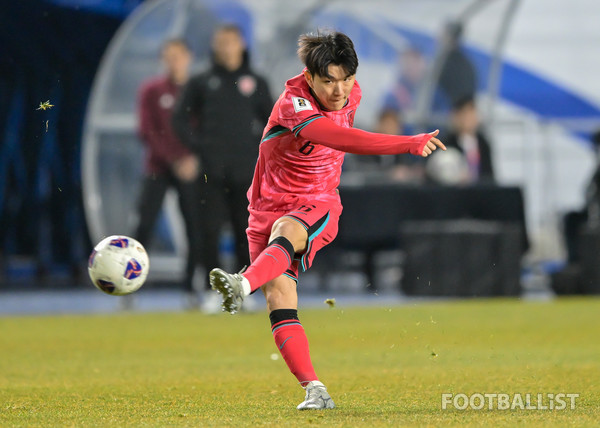
For years, the biggest question in the Korean national team midfield has never been how to replace Hwang In-beom, but rather who should play alongside him.
Hwang, one of the key figures in head coach Hong Myung-bo’s 3-4-2-1 system, missed significant international action due to recurring injuries. After suffering an ankle injury with his club last month and being ruled out for the remainder of the season, there were concerns over whether he would regain match sharpness in time for the 2026 FIFA World Cup.
Those concerns quickly faded in Korea’s 5-0 victory over Trinidad and Tobago on May 31 in Provo, Utah. Introduced in the second half, Hwang immediately demonstrated his quality with a one-touch pass that helped create Korea’s fourth goal. His passing range, mobility, and set-piece delivery all suggested he remains at the center of Hong’s plans.
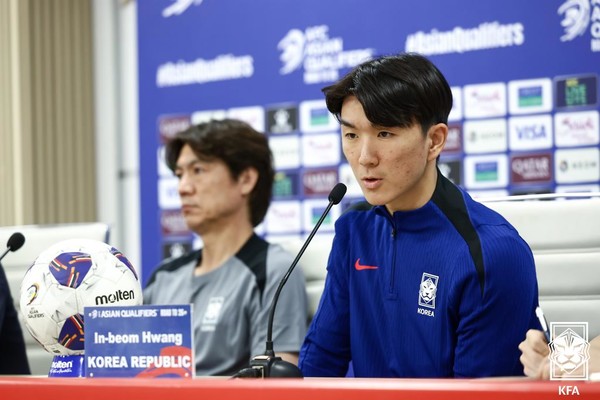
With Hwang fit again, the focus shifts to identifying the most effective midfield partnership around him.
The most balanced options are fellow central midfielders Kim Jin-gyu and Baek Seung-ho. Both are comfortable operating in a two-man midfield and offer tactical flexibility. Alongside Kim, Hwang can play a more dynamic box-to-box role, while a partnership with the deeper-lying Baek could allow him to operate further forward and influence attacks more directly.
The Trinidad and Tobago match offered a glimpse of both profiles. Baek frequently dropped between the center-backs to help build play, while Kim remained more central and focused on ball circulation and transitions. Hwang’s versatility allows him to adapt naturally to either setup.
For opponents with greater physical presence, Hong could opt for a more defensive-minded partnership. Park Jin-seop, the squad’s most natural ball-winning midfielder and a player capable of operating as a center-back, offers additional strength in duels and aerial battles. That option could become particularly relevant against physically imposing opponents such as Czechia.
Another intriguing alternative is Lee Gi-hyeok. Although primarily a left-footed defender, Lee has experience across multiple positions and impressed against Trinidad and Tobago with his composure under pressure and passing ability. His versatility makes him a potential midfield option in specific tactical situations.
Perhaps the most aggressive combination, however, is Hwang alongside Lee Jae-sung. The pair featured together in the second half against Trinidad and Tobago and immediately increased Korea’s pressing intensity. Their energy and movement allowed Korea to win possession higher up the pitch and create attacking opportunities through pressure rather than possession alone.
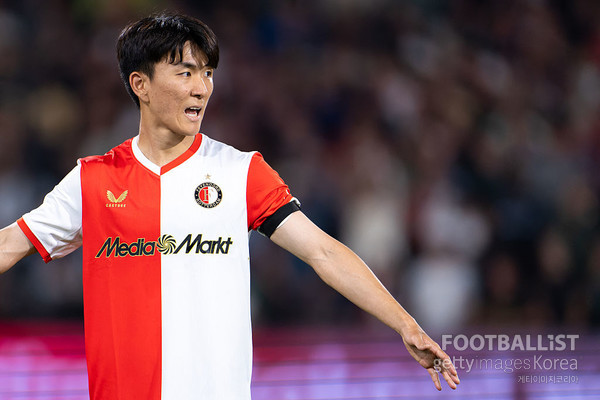
While Lee is best known as an attacking midfielder, he has previously played deeper roles for Mainz in the Bundesliga and possesses the tactical intelligence and work rate required to operate in central midfield. His partnership with Hwang may have appeared experimental, but it is rooted in previous experience.
With Hwang fully fit again, Korea’s midfield appears far more settled. The challenge for Hong Myung-bo is no longer finding a replacement, but selecting the right partner for different opponents and situations during the World Cup.

Hi, I’m Greg – Product Designer
{page_url}


Notion


More

Screenshot

Long
Screenshot

Copy link

Send to your
devices

QR code


관심 없음
{카테고리}에 관심 없음