더팩트
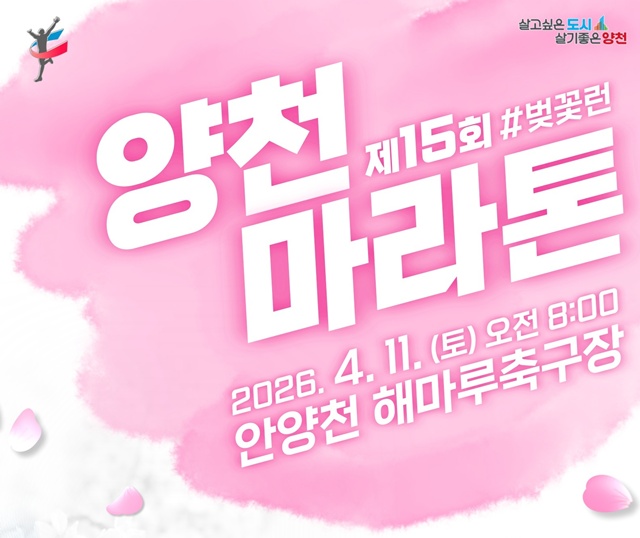
안양천 따라 달린다…11일 양천구 마라톤 대회 '#벚꽃런'
위키트리
At the film’s Seoul press conference on April 8, Meryl Streep made the sequel’s timing feel less like a delay and more like the point. According to her, this story could not have arrived earlier because the world itself had to change first. The original film belonged to a pre-iPhone era, a time before smartphones reshaped publishing, celebrity, fashion, and media consumption. The sequel, by contrast, is built for a world where everything moves faster, attention is fragmented, and even powerful institutions are forced to fight for relevance.
That is what makes this return feel justified. It is not simply revisiting beloved characters. It is asking what those characters look like when the system around them no longer works the way it once did.
The first 'The Devil Wears Prada' was released in 2006, when glossy magazines still held cultural power in a very different way. Miranda Priestly ruled from inside that structure. Andy Sachs entered it as an outsider. Emily lived inside its pressure cooker with almost religious devotion.
Now, nearly 20 years later, those same women return to a media world transformed by digital acceleration, collapsing attention spans, and a new economy of image and influence.
That shift is central to the sequel’s premise. Miranda, still the commanding editor of Runway, reunites with Andy and Emily in a fashion industry no longer protected by the old rules. This time, the fight is not just about status inside a magazine office. It is about survival in a business that has changed its language, its speed, and its center of power.
That is why 2026 matters. The story now has something new to say.
What Changed and What Didn’t
One of the most interesting ideas raised at the press event was that the sequel is built on the coexistence of change and continuity.
Time has altered all three women. Andy is no longer the uncertain young assistant trying to keep up. She has grown into a journalist with skills, self-possession, and a life of her own. Emily is no longer a harried assistant either; she has risen to become a luxury-brand executive. Miranda, meanwhile, remains formidable, but now stands inside a world that no longer automatically bends to the authority she once embodied.And yet, some things remain unmistakably the same.
Miranda still refuses to bow easily. Andy still becomes visibly flustered in her presence. Emily still carries the sharpness that made her unforgettable in the first film. The sequel seems to understand that its greatest pleasure lies not in erasing what audiences loved, but in letting those familiar qualities survive inside new realities.
One of the most revealing comments from the press conference was the suggestion that Andy is no longer simply Miranda’s opposite.In the first film, Andy leaves Runway by throwing her phone into a fountain and choosing a different path. In the sequel, however, Miranda’s struggles begin to look more familiar to her. Andy has grown older, more experienced, and more aware of what it costs to maintain integrity in a transformed industry.
The original 'The Devil Wears Prada' became much larger than a fashion movie. It crossed gender lines, industry lines, and generational lines. Streep noted that while the film was expected to resonate with women, its appeal became much broader than that. Miranda, as a female boss figure, invited even male audiences to feel something they may not have expected from this world.
The sequel appears ready to cross another boundary.
This time, it is not only about fashion, ambition, or mentorship. It is also about aging, reinvention, representation, and what happens when women over 50 and especially over 70 remain fully visible in spaces that often try to erase them. Streep spoke directly about how rare it still is to see a woman over 70 playing a boss on screen, and how meaningful it felt to return with that kind of presence intact.
In the end, the strongest message from the press conference was that 'The Devil Wears Prada 2' does not want to define itself too neatly.
It is not coming back because audiences missed the clothes or the one-liners, though they certainly did. It is coming back because the world that once made 'The Devil Wears Prada' iconic has changed enough to make its questions feel urgent again.
Hi, I’m Greg – Product Designer
{page_url}


Notion


More

Screenshot

Long
Screenshot

Copy link

Send to your
devices

QR code


관심 없음
{카테고리}에 관심 없음